Intellispec
Mega Menu Unique 12 - Final Products Centering Tweak
IntellispecIntellispec
  • Home
  • Author: marketing.krimatix

marketing.krimatix

Chevron GOM Accelerates Critical Turnaround Operations with IntelliSpec Platform

Chevron GOM Accelerates Critical Turnaround Operations with intelliSPEC Platform Houston, TX – July 2025 — Chevron Gulf of Mexico (GOM) successfully completed a high-stakes refinery turnaround three days ahead of schedule using the intelliSPEC platform, a mobile-first, AI-ready solution designed for complex field execution in industrial environments. Chevron GOM implemented IntelliSpec’s Turnaround Execution Suite across multiple offshore crews, enabling real-time tracking of inspection status, digital QA logging, and faster alignment between maintenance, procurement, and safety. “This was the smoothest turnaround we’ve run in years,” said Priya Subramaniam, Turnaround Lead at Chevron GOM. “With intelliSPEC, we weren’t guessing what got done — we were seeing it, live, from the field.” Facing over 300 piping and vessel inspections, the Chevron team deployed ruggedized tablets with intelliSPEC’s Mobile Inspection Wizard, allowing API 570 inspectors to work completely offline, capture images, flag issues, and trigger instant workflows even in no-connectivity zones. Using the Mechanical Integrity Tracker, leadership monitored component-level progress, overdue risks, and required rework. Findings were automatically routed to planners and safety teams via the integrated Workflow Planner, reducing the time between inspection and corrective action from days to hours. “It’s more than digitization — it’s operational intelligence at the edge,” said Kashif Mohammed, VP of Industrial Solutions at intelliSPEC. “Turnaround leaders get full visibility while keeping crews focused and safe.” The intelliSPEC deployment was completed in under two weeks and saw rapid adoption from field crews, third-party inspectors, and site management. The result: reduced downtime, improved compliance, and no missed handovers. More Press Coverage Explore our latest press releases and media coverage highlighting PK Companies’ innovations and achievements. View All Press Items
Read More +

Why Coating Rework Is So Expensive And How Smart Field Tools Can Stop It Cold

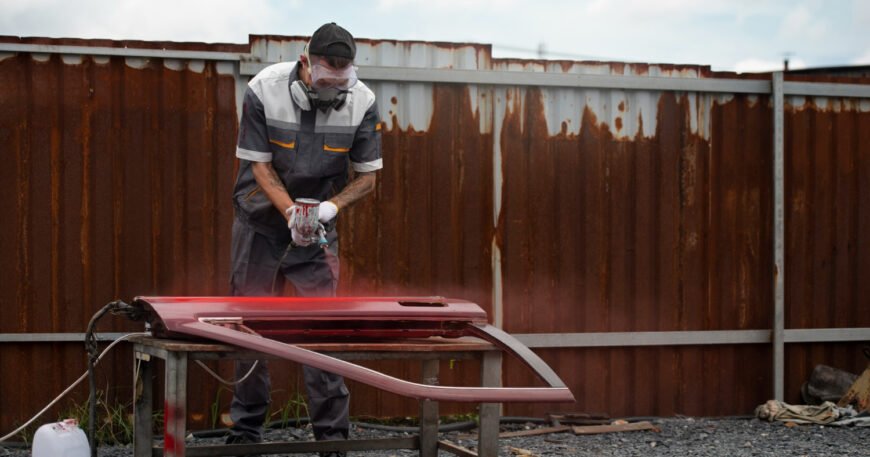
Why Coating Rework Is So Expensive And How Smart Field Tools Can Stop It Cold Why Coating Rework Is So Expensive — And How Smart Field Tools Can Stop It Cold Industrial coatings are the frontline of asset protection — yet coating rework remains one of the most persistent (and expensive) hidden costs in field operations. The culprit? Poor visibility, disconnected QA workflows, and missing documentation. A 2023 report by NACE International showed that coating failures account for up to 20% of total maintenance costs in heavy industry. And the average rework job? It’s not just time-consuming — it can cost 2–4x the original coating application, especially when it involves re-blasting or downtime on critical assets. The Real Problem Isn’t Paint — It’s Process At Gulf Integrity Services (GIS), a contractor managing coating scopes for a major petrochemical facility in Louisiana, this problem came to a head during a recent outage. Inspectors were documenting DFTs (Dry Film Thickness) on paper logs, contractors were rotating across shifts, and the superintendent had no real-time view into failures, touch-ups, or compliance. “We had guys measuring with micrometers, taking photos with their phones, and logging results in notebooks,” said Imran K., the coatings superintendent. “There was no centralized view of what passed, what failed, and what needed to be redone.” Enter IntelliSpec’s Coating Intelligence Suite GIS implemented intelliSPEC’s Fireproofing & Coating AI module and deployed mobile QA forms across all field crews — rugged tablets included. Every inspector could now: Record DFT readings with AI-guided checklists Auto-capture and tag pre/post photos to specific asset zones Sync offline data to a central dashboard the moment connectivity resumed. Supervisors could immediately view real-time pass/fail trends, flagged zones, and crew-specific performance — all without waiting for end-of-shift paper reports. What Changed? Within six weeks: Rework dropped 45%, mainly from faster issue detection QA cycle time went down by 30% The team achieved 100% mobile form adoption, including third-party contractors Leadership had complete traceability for every inspection, coating pass, and failure These results align with broader trends — according to IIoT World, 82% of manufacturing firms report unexpected downtime due to poor inspection tracking, and AI-enabled workflows are projected to reduce defect rates by 25–50% across field teams by 2026. What You Can Do Now If your team is still using clipboards, disconnected photo galleries, or Excel to manage coating QA, it’s time to rethink the process. Ask yourself: Can I see coating failures in real time? Are we spending more on rework than on prevention? Do I trust our DFT records during audits? “Once we digitized the field, we didn’t just reduce rework. We built trust across crews,” said Imran. Final Takeaway Coating isn’t just about what goes on the surface — it’s about the integrity of the entire workflow. With intelliSPEC, industrial field teams are cutting costs, preventing rework, and proving compliance from day one. 🔵 Ready to reduce coating rework and digitize your QA workflows? More Insights & Articles Explore our latest insights, technical articles, and industry trends to stay ahead of the curve. View All Blog Posts
Read More +

AI in Inspections Transforming Safety, Efficiency, and Reliability

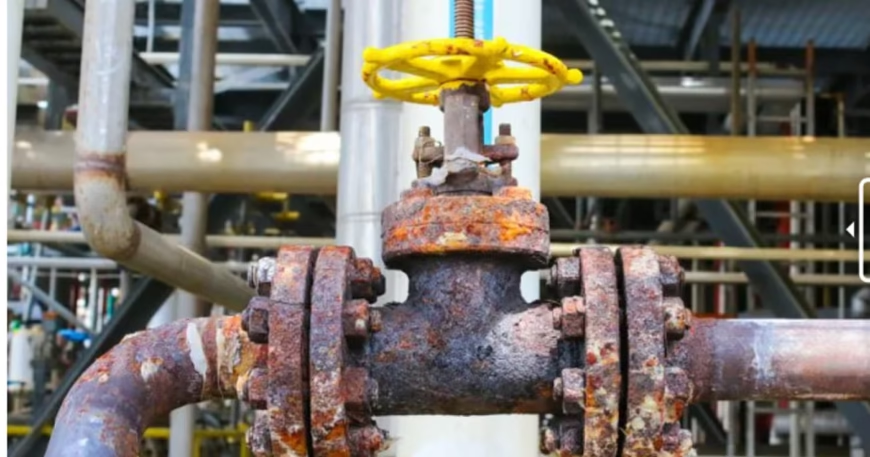
AI in Inspections Transforming Safety, Efficiency, and Reliability Inspections have always been at the heart of keeping industries safe—whether it’s oil and gas pipelines, power plants, manufacturing facilities, or even bridges and airplanes. Traditionally, inspections have been manual, labor-intensive, and prone to human error. Today, Artificial Intelligence (AI) is changing that story. Why AI Matters in Inspections AI doesn’t replace inspectors—it empowers them. Inspections generate huge amounts of visual data (photos, videos, thermal scans, ultrasonic readings), and going through all of it manually is slow and inconsistent. AI helps by: Automating defect detection: Cracks, corrosion, leaks, or coating damage can be spotted faster with computer vision models. Standardizing results: Unlike humans, AI doesn’t get tired or miss small anomalies. It applies the same level of scrutiny every time. Saving time and costs: Faster inspections mean less downtime for equipment and reduced operational losses. Predicting failures: With enough data, AI can forecast when and where issues might occur, enabling preventive maintenance instead of reactive fixes. Real-World Applications Oil & Gas – AI models can detect corrosion under insulation (CUI) or weld cracks in pipelines, reducing risk of leaks and accidents. Aerospace – Automated image analysis ensures early detection of structural fatigue in aircraft components. Manufacturing – Vision systems on assembly lines identify defective parts before they move further downstream. Infrastructure – AI-powered drones scan bridges, towers, and buildings to spot cracks or stress points that aren’t visible to the naked eye. Human + AI: A Better Partnership It’s important to remember that AI doesn’t operate in isolation. The best inspection systems are human-in-the-loop. Inspectors validate AI findings, provide context, and make judgment calls. This partnership improves accuracy, builds trust, and helps organizations meet compliance standards. The Road Ahead The future of AI in inspections looks promising: Multimodal AI combining text, images, and sensor data for a holistic view. Edge AI running models directly on drones or handheld devices for real-time results. Generative AI creating instant inspection reports, summaries, and even suggested repair actions. As industries face tighter safety regulations and pressure to cut costs, AI-powered inspections will become less of a luxury and more of a necessity. More Insights & Articles Explore our latest insights, technical articles, and industry trends to stay ahead of the curve. View All Blog Posts
Read More +

AI in Industrial Inspections: Enhancing Accuracy and Uptime in Heavy Industry

AI in Industrial Inspections Enhancing Accuracy and Uptime in Heavy Industry Industrial manufacturers are losing up to $260,000/hour in unplanned downtime and wasting millions on inspection inefficiencies. Discover how AI-powered mobile inspections can tighten compliance, improve asset visibility, and boost uptime—without disrupting field operations. 1. Executive Summary Unplanned equipment downtime is one of the costliest pitfalls in heavy industry—averaging between $125K to $260K per hour, depending on sector and scale NinjaOne+8Institute for Supply Management+8Output Industries+8. Traditional inspection methods—paper forms, siloed data, human error—aren’t cutting it. This white paper explores how IntelliSpec’s AI-driven mobile inspection tools can transform inspection workflows to improve uptime, compliance, and asset integrity. 2. Industry Context & Challenges The Downtime Problem The Siemens 2024 study shows unplanned downtime costs the top 500 global firms nearly 11% of annual revenue (Institute for Supply Management, Business Insider). In manufacturing, downtime costs average $260K per hour (Pingdom, Wikipedia, Output Industries). Companies report unplanned outages monthly, at an average of $125K per hour (Institute for Supply Management). Gaps in inspection workflows Manual inspections are slow, inconsistent, and often disconnected from maintenance planning and decision-making. Lack of real-time visibility delays issue escalation and complicates audit compliance. Growing regulatory pressures and digital transformation goals demand smarter, streamlined inspection processes. 3. AI & Market Trends The digital inspection software market is expanding rapidly—projected at $6.4 B in 2023, growing at 6.7% CAGR to 2032 Verified Market Research+2Business Insider+2Market.us+2PR Newswire+7Market Research Future+7Market.us+7Yahoo Finance. The AI visual inspection segment is even hotter—$15.5 B in 2023 with a ~19.6% CAGR to 2033 Market.us. Adoption is strongest in North America (~38% share) and manufacturing-heavy sectors PR Newswire+3Market.us+3Reanin+3. 4. IntelliSpec Solution Core Modules NDT AI Assistant: AI-powered analysis of ultrasonic, thickness, and visual inspection data—including defect detection and common failure pattern recognition. Mobile Inspection Wizard: Field-ready, offline-capable forms with access to digital asset information. Mechanical Integrity Dashboard: Real-time risk and condition visibility linked to RBI and maintenance systems. Workflow in Action Inspector launches mobile form, selects asset, and captures images or NDT data. AI flags probable defects and suggests follow-up steps (e.g., confirm thickness, notify maintenance). All results sync when connectivity returns; dashboards update maintenance planners and asset integrity teams instantly. Continuous feedback supports risk-based inspection and long-term asset health strategies. 5. Technical & Operational Impact Efficiency: Up to 30% faster inspections by automating defect flagging and removing manual steps. Uptime: Faster issue detection supports better availability—estimated 11% gain aligning with Siemens/ABB insights Market Research FutureInstitute for Supply Management. Cost Avoidance: By avoiding even one hour of unplanned downtime at typical rates ($125K–$260K), ROI becomes immediate. Compliance & Traceability: All inspection records are timestamped, geotagged, and centrally stored—ideal for audits and RBI reporting. 6. Key Takeaways Manual inspections are a liability; AI offers both precision and speed. Intelligent, connected inspection workstreams prevent data silos and “last-minute surprises.” Uptime gains measured in hours translate to cost savings in the hundreds of thousands per incident. Market trends strongly favor digitized, AI-augmented inspections. Conclusion AI in inspections isn’t futuristic—it’s factory-floor ready. Companies leveraging mobile AI inspection tools like intelliSPEC are avoiding downtime, delivering reliable asset performance, and gaining strong returns. With digital inspection markets set to expand 6–20% annually, early adopters stand to lead in operational clarity and safety. About Frontier Integrity Solutions Frontier Integrity Solutions specializes in mobile and AI-enhanced asset inspections across manufacturing and energy. They deployed intelliSPEC’s NDT AI and Inspection Wizard in early 2025 and witnessed immediate gains in compliance, coordination, and uptime. About IntelliSpec intelliSPEC is an AI-native, offline-capable SaaS platform designed for industrial inspections, coatings, RBI, safety, and field execution. It empowers field teams with real-time, actionable workflows and builds trusted data pipelines from asset to audit. More Research & Resources Explore our comprehensive research, technical resources, and industry insights to deepen your knowledge. View All White Papers
Read More +

Transforming Industrial Inspections with AI-Based Multi-Modal Technology

Transforming Industrial Inspections with AI-Based Multi-Modal Technology Large industrial facilities like refineries, chemical plants, offshore rigs, and power stations operate under intense safety, compliance, and uptime pressures. Traditional inspection methods are siloed and often depend on manual data entry, visual checks, and disjointed reporting. This leads to delayed decision-making, inconsistent quality, and high costs for unplanned shutdowns. Challenge Fragmented data collection: Visual inspections, sensor readings, and NDT (non-destructive testing) reports exist in different systems or spreadsheets. Limited workforce efficiency: Inspectors spend significant time transcribing, formatting, and uploading data. Delayed insights: Root cause analysis and predictive maintenance decisions lag behind actual events. Regulatory pressure: Compliance audits demand traceability and evidence across multiple data formats. Solution – AI-Based Multi-Modal Inspections An integrated platform that uses AI to process and correlate data from multiple modalities: Computer vision: Detect anomalies, corrosion, cracks, leaks, or misalignment from photos, videos, and drone feeds. NDT data ingestion: Automatically interpret ultrasonic, radiographic, thermographic, and acoustic data for pattern detection. IoT sensor streams: Combine temperature, vibration, pressure, and flow data with historical inspection records. Natural language processing: Extract insights from free-text inspector notes, voice recordings, and historical reports. Predictive analytics: Forecast asset degradation, estimate remaining useful life, and recommend optimal maintenance windows. Implementation Deployed a secure, cloud-hosted AI platform accessible via web and mobile. Integrated handheld inspection devices, drones, and IoT sensors for real-time data capture. Created an intuitive workflow where inspectors can upload images, speak notes, and sync sensor data automatically. Used a metadata-driven approach to link all inspection data to assets, locations, and regulatory requirements. Results After six months of pilot operations at a petrochemical plant: Inspection time reduced by 40% due to unified data capture and automatic reporting. Anomaly detection accuracy improved by 25% compared to human-only inspections. Compliance audit preparation time cut by 60% thanks to a single source of truth. Avoided a potential $1.2M loss by predicting a critical pipeline failure two weeks before scheduled maintenance. Lessons Learned Multi-modal AI works best when paired with clear workflows for inspectors and maintenance teams. Human-in-the-loop validation boosts trust in AI predictions and accelerates adoption. Integration with existing asset management and ERP systems is crucial for scaling value. Future Outlook As the platform evolves, the next phase will incorporate: Augmented reality overlays for live inspections. Automated work order generation directly from detected anomalies. Cross-facility benchmarking to prioritize capital spending on high-risk assets. More Success Stories Explore other case studies from various industries showcasing the transformative power of intelliSPEC. View All Case Studies
Read More +

How CHS Slashed Coating Rework by 45% Using IntelliSpec’s AI-Driven Workflow

How CHS Slashed Coating Rework by 45% Using intelliSPEC’s AI-Driven Workflow For CHS’s field coating team, missed DFTs, duplicate inspections, and rework were eating up budgets and morale. By switching to IntelliSpec’s Fireproofing & Coating AI module, they streamlined QA checks, digitized all forms, and empowered inspectors with AI-driven defect tagging — cutting rework nearly in half. “We had no visibility into who painted what, when, and whether it passed DFT — especially with third-party contractors rotating in and out,” said Ravi T., Coating Superintendent. The Problem Before IntelliSpec, coating inspections relied on paper logs and manual micrometer readings. With multiple crews and subcontractors working in shifts, CHS faced: Inconsistent DFT documentation Lack of traceability on coatings Delays in touch-up approvals Unnecessary rework when QA data went missing The Solution CHS implemented intelliSPEC’s Fireproofing & Coating AI Module, using: Digital Coating Forms with offline syncing. AI-driven image capture and DFT tagging. GIS-based mapping of coated zones. Live dashboard showing pass/fail rates, rework zones, and coating thickness logs.   Inspectors used ruggedized tablets to capture before/after photos, run AI-assisted DFT checks, and escalate failed spots immediately to the touch-up team. Each coating record was auto-linked to asset tags and time-stamped. The Impact The first 6 weeks saw a dramatic shift: Field QA times dropped All parties operated from the same data Supervisors finally had traceable QA history by asset and crew Rework dropped 45% in 45 days “For the first time, I knew exactly where the failures were — and why. That changed everything,” said Ravi.” Key Results & Achievements Measurable outcomes and achievements demonstrating the transformative impact and value realized from the intelliSPEC implementation. Efficiency Gains Achieved a 45% reduction in coating rework within just 6 weeks of implementing the solution. Data Integrity Ensured 100% digital QA log coverage, eliminating manual errors and data loss across all sites. Inspection Speed Enabled 30% faster DFT validation, significantly speeding up quality checks and sign-offs. Full Traceability Provided full traceability for every job by zone, crew, and asset, meeting strict audit requirements. Platform Adoption Facilitated easy adoption across the entire ecosystem: “One platform for everyone — even third-party contractors.” Operational Improvement Streamlining inspection workflows to drive operational excellence across all facility maintenance cycles. More Success Stories Explore other case studies from various industries showcasing the transformative power of intelliSPEC. View All Case Studies
Read More +

3 Days Saved, Zero Surprises: How Chevron GOM Streamlined Their Turnaround with IntelliSpec

3 Days Saved, Zero Surprises: How Chevron GOM Streamlined Their Turnaround with intelliSPEC The Problem During past outages, the inspection and repair teams worked in silos. Paper forms delayed status updates. Field teams struggled with connectivity. By the time a flagged component was reported to planning, the part wasn’t ordered or available. They often lost 2–3 days just aligning on the facts. “We were reactive. Everything felt urgent because nothing was transparent.” – Priya S., Turnaround Lead” The Solution Chevron GOM deployed intelliSPEC’s Turnaround Execution Suite, including: Mobile Inspection Wizard (for structured offline inspections) Mechanical Integrity Manager (to track asset condition in real-time) Workflow Planner (to route inspection outcomes to maintenance, safety, and procurement) Tablets were pre-loaded with inspection checklists and photo capture workflows. Even in offshore no-signal zones, teams logged findings that auto-synced once online. The Impact Within 7 days of rollout: All inspectors were fully onboarded 300+ assets were inspected and logged without manual re-entry Critical findings were escalated instantly to the right team The handover phase, previously done by email, was tracked live.   Planning teams gained visibility. Priya could triage issues in the moment. Procurement could pre-order parts. And most importantly, no last-minute “gotchas” popped up during recommissioning. “It’s the first time I felt like we were in control of the turnaround, not just reacting to it.” Key Results & Achievements Measurable outcomes and achievements demonstrating the transformative impact and value realized from the intelliSPEC implementation. Turnaround Efficiency Achieved 3 days saved in total turnaround duration through streamlined digital workflows. Data Automation Realized a 100% reduction in manual data entry, eliminating transcription errors and speeding up reporting. Rapid Adoption Achieved 95% inspector adoption within the first week, demonstrating superior usability. Quality Assurance Recorded Zero missed assets during QA re-inspection, confirming complete coverage and accuracy. Leadership Validation Received validation: “Best turnaround handover in 5 years”, according to the plant director. Operational Improvement Streamlining inspection workflows to drive operational excellence across all facility maintenance cycles. More Success Stories Explore other case studies from various industries showcasing the transformative power of intelliSPEC. View All Case Studies
Read More +
Cart

No products in the cart.

Select the fields to be shown. Others will be hidden. Drag and drop to rearrange the order.
  • Image
  • SKU
  • Rating
  • Price
  • Stock
  • Availability
  • Add to cart
  • Description
  • Content
  • Weight
  • Dimensions
  • Additional information
Click outside to hide the comparison bar
Compare